
By Electrician Morayfield · Updated
Two switchboard recommendations can sound similar while describing different jobs. One may address a particular fault; another may include changes associated with a new appliance or additional circuits. A headline price is difficult to compare until the reason for the work and the included scope are clear.
For ordinary planned work, describe the appliance change or electrical concern. You do not need to decide that the entire board requires replacement before making an enquiry. A contractor’s assessment should connect a recommendation to the actual property and proposed work, not simply to an internet rule about the age of a house.
Start with why the board was mentioned
A recommendation made during fault investigation may have a different purpose from one made while planning a new oven. The first conversation starts with something not working as expected. The second starts with a proposed change. Without that distinction, two reasonable discussions can become a confusing argument about which contractor is correct.
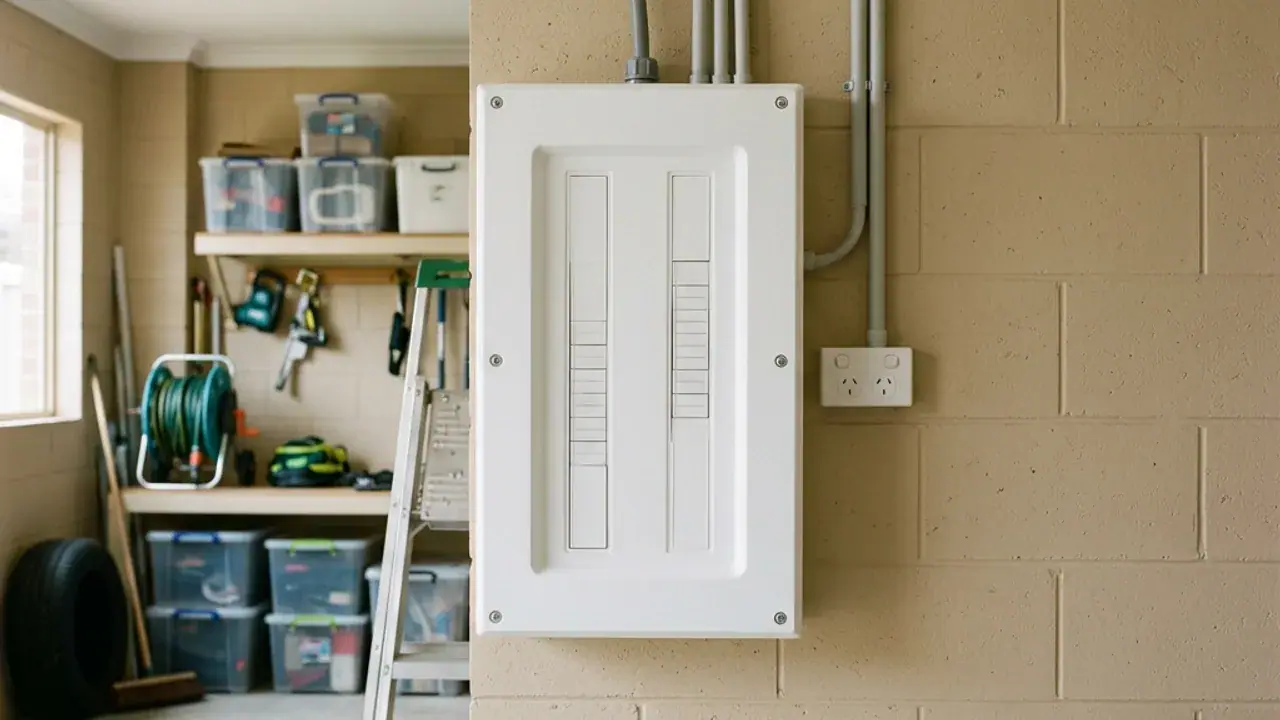
Our switchboard work page explains those job types. It does not establish whether your particular equipment should be retained, altered or replaced. A photograph can help describe an enclosure, but it cannot reveal all circuit conditions or certify the property.
The right question is what the contractor has assessed and how that assessment relates to the proposal. Do not remove covers to obtain more detail. Queensland’s Don’t DIY guidance explains why fixed electrical work is for appropriately licensed people. Customer questions about scope are useful; customer experimentation inside a board is not.
Investigation is not the same as a settled repair
Sometimes a contractor can describe a particular replacement at the outset. In other cases, investigation comes first because the cause is not yet established. An offer for an assessment should be compared with another assessment, not treated as though it includes every possible repair afterwards.
Ask whether a quoted amount is for investigation, specified work, or a combination. If further work depends on what is found, that uncertainty should be clear before you agree. This is not a reason to distrust all uncertainty: concealed conditions can be real. It is a reason to avoid assuming an open-ended job and a narrowly defined job are interchangeable.
The electrical faults page is useful when the starting point is a symptom rather than an upgrade plan. The job checklist helps separate what you observed from what remains to be assessed. Neither tool supplies a technical diagnosis or a predicted approval result.
New appliances do not create one universal answer
A new oven or other fixed appliance can prompt questions about the existing electrical arrangement. That does not mean every appliance change automatically needs the same switchboard work, nor does it mean a recommendation can be dismissed without understanding the proposed installation.
Explain what appliance is being considered, whether it has already been purchased, and what existing equipment it replaces. The useful output is a proposal tied to those facts. A general statement that “all old boards must go” does not explain the particular job, while an assumption that an old arrangement must always be adequate is equally unhelpful.
If the wider project includes extra outlets or fans, our power-point planning and fan and lighting choices guides can help describe the intended result. Combining those details makes the scope easier to understand without deciding the electrical solution in advance.
Protection and capacity are different questions
A safety switch and a circuit breaker do not have the same purpose. The Queensland Electrical Safety Office’s safety-switch guidance distinguishes protection against electric shock from circuit protection and explains that a safety switch does not necessarily cover every circuit.
That distinction matters when reading a quote. An outlet addition, a protective-device change and a board replacement may be related, but they should not be described as though they are one interchangeable product. Our safety-switch service information addresses protection specifically; it does not label every existing board compliant or non-compliant.
Ask which part of the proposal responds to which issue. A contractor can explain why work is required for the proposed installation, or why it is being offered as an improvement. The customer’s role is to understand that explanation, not to infer circuit protection from an enclosure’s appearance.
Compare an offer with the offer beside it
Useful comparisons include the work described, products or equipment assumptions, investigation allowance and stated exclusions. A low total for a smaller scope is not necessarily a better offer for the result you want. A larger proposal is not automatically justified simply because it contains more items.
The ACCC’s consumer contract guidance explains why agreed terms matter. Confirm what you are accepting before work proceeds. Do not treat a website enquiry, a preliminary conversation or a photograph exchange as agreement to every later suggestion.
When exploring ordinary planned work, send the reason switchboard work was raised. Include any related appliance or room change. You can explain that the proposal is still being compared without publishing someone else’s private quote or personal details in a general enquiry.
The contractor and the property still matter
Queensland distinguishes electrical worker licences from electrical contractor licences; see the current WorkSafe licence classes. Confirm the contractor you are considering rather than interpreting this site’s information brand as evidence of a trade licence.
Our Morayfield and Caboolture guides give local context without promising attendance. Describe the planned job and actual suburb, then confirm the proposed contractor, scope and written price before agreeing to proceed. Compare like-for-like work before choosing.